


Hyper-Realistic Animatronic Figures: Bringing Static Sculpture to Life

We are used to seeing sculpture at rest. In galleries and themed attractions, people and animals are fixed in a single moment, telling stories through pose, expression and silhouette.
But what changes when a figure gently turns its head, blinks, or shifts its gaze? Even a small movement can alter how visitors read the character and the scene around it.
After more than two decades of work in hyper-realistic sculpture, DXDF expanded its earlier experiments with moving portraits in 2026. The team began bringing precision mechanical transmission, programmable control systems and lifelike silicone sculpting into a more complete animatronic figure workflow.
The goal is not constant motion. Each movement should preserve the figure's visual realism while helping the character communicate attention, mood or narrative purpose.
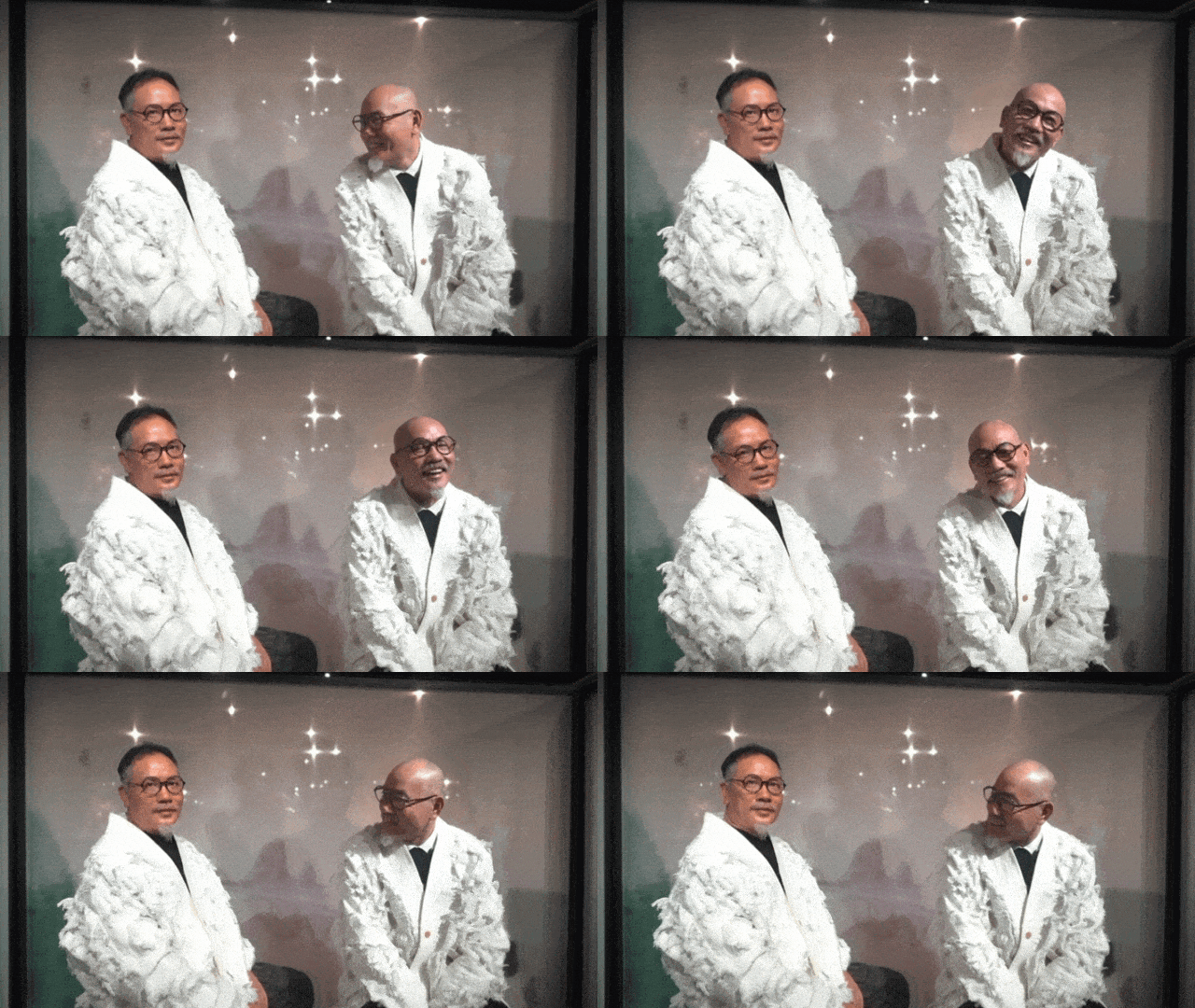
From a static portrait to natural micro-movement
Project example: Animatronic portrait of contemporary artist Wu Ningya
In 2024, contemporary artist Wu Ningya visited DXDF. During conversations with founder Zhou Xuerong, a new idea emerged: preserve the appearance and character of a portrait sculpture while allowing it to develop natural movement.
The collaboration took six months. The completed figure became the company's first animatronic portrait and provided practical experience for the motion systems developed afterwards.
A custom micro-drive system inside the figure allows the head to turn left and right, look up and lower its gaze. The movement is deliberately restrained, staying closer to the range of everyday human motion than to a theatrical mechanical effect.
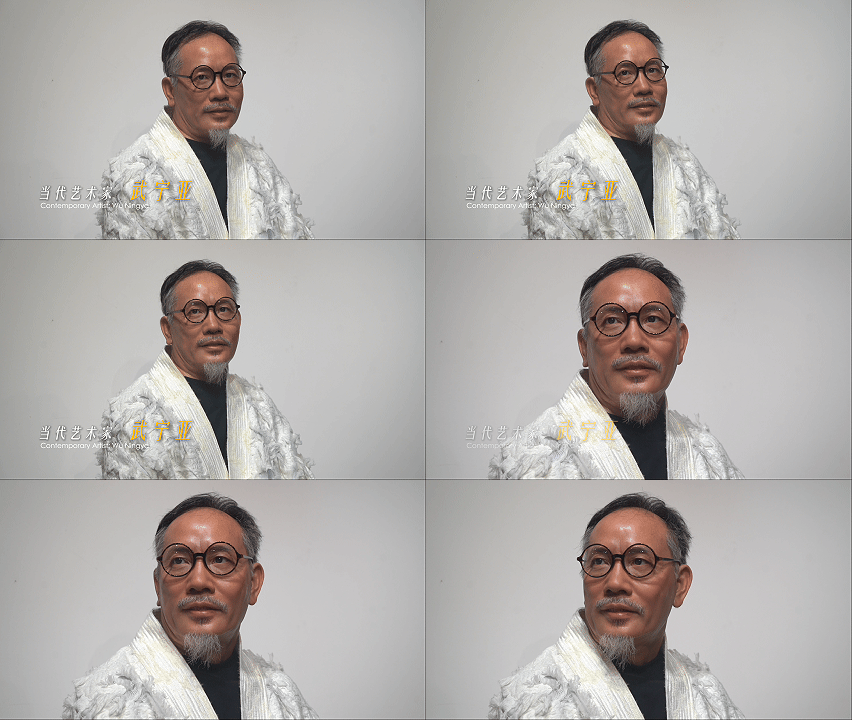
For visitors, the most interesting change is not simply that the sculpture moves. Once the head begins to turn, the fixed portrait develops a clear direction of attention. It appears to notice something within the space, changing the relationship between the figure and the person standing in front of it.
Recreating a classic television scene in three dimensions
Project example: Journey to the West themed space at Chaoren Park, Chaozhou
This installation recreates familiar characters and scenes from the classic Chinese television adaptation of Journey to the West. The travelling group, the White Dragon Horse and the Dragon Palace episode carry a shared screen memory for several generations of viewers.
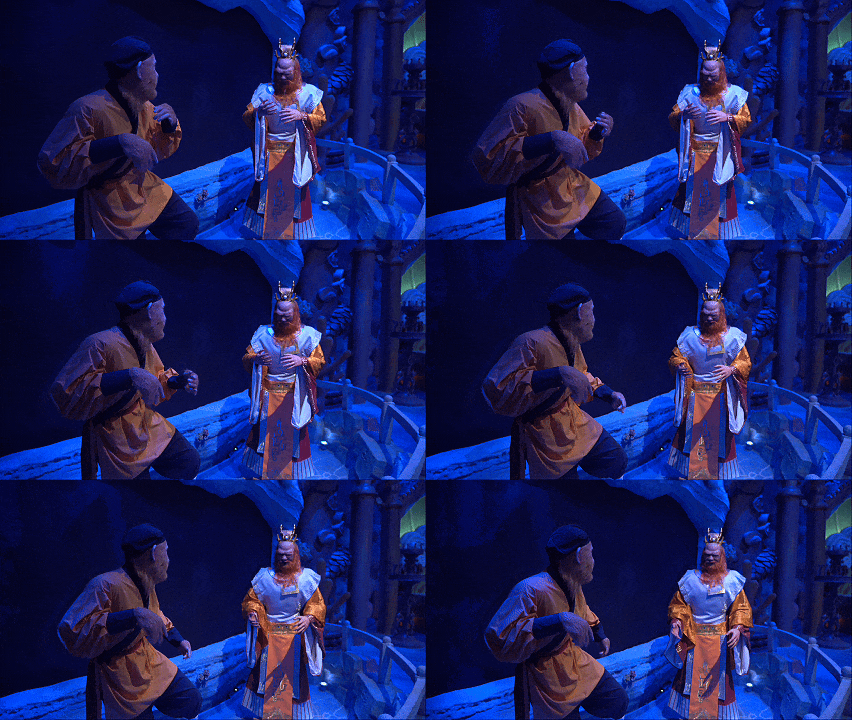
In this type of project, accurate character likeness is only the starting point. Position, direction of travel, eyeline and motion rhythm all affect whether visitors can recognize the scene immediately. The design translates relationships that once existed on screen into a physical space that visitors can enter, walk through and photograph.
In the travelling scene, the figures and the White Dragon Horse move within one coordinated rhythm. Small rises and falls in the bodies, the direction of each head and the movement of the horse work together, giving the static group a sense of forward travel.
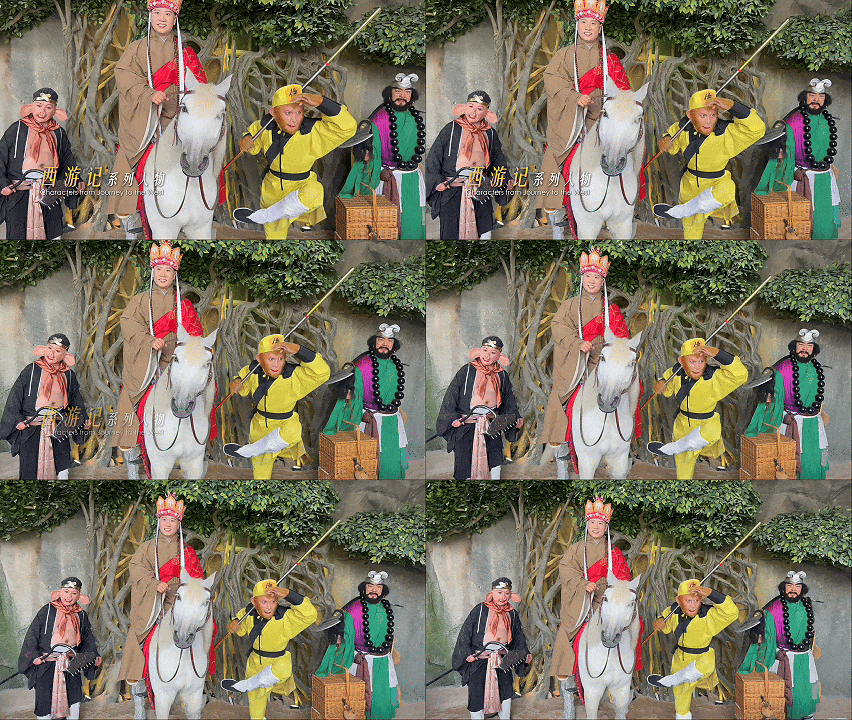
Group animation does not mean making every character move at the same time. The design must decide who moves first, which actions stay synchronized and which figures need only a slight response, based on the role of each character and the focus of the scene.
That distinction is what allows motion to support the recreation of a classic screen IP or a specific historical setting. Visitors should recognize the relationships at a glance and feel that the group is moving or that the story is unfolding. Familiar screen imagery can then extend into a physical environment that people can enter and experience.
Compound movement for a more natural animal presence
Project example: Animatronic orangutan for a natural history museum
Animatronic sculpture is not limited to human figures or themed stories. It can also help natural history museums present animal behaviour and expression more directly.
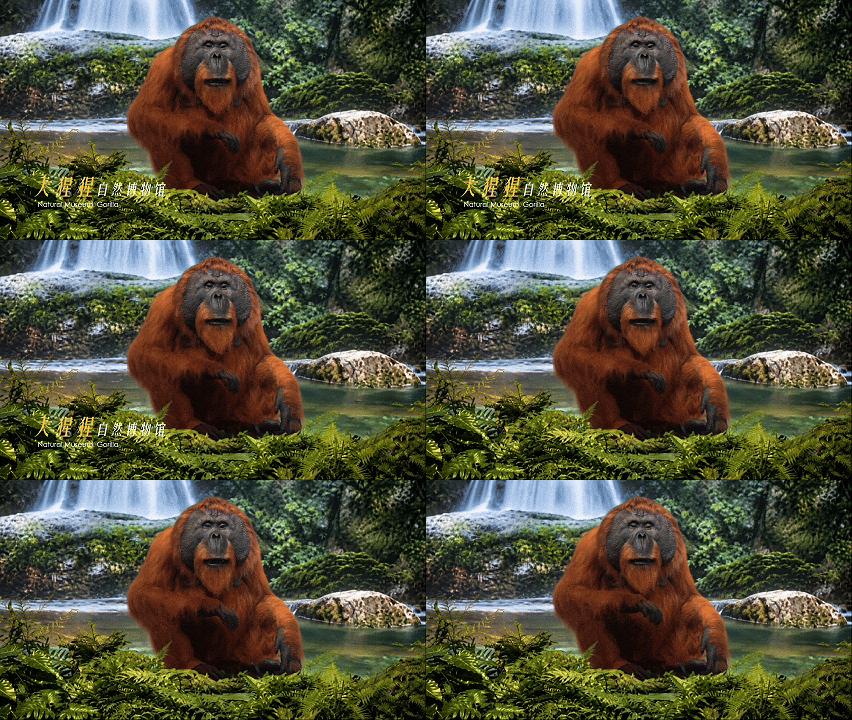
For this custom orangutan, the team worked on body proportions, facial structure, skin texture and hair distribution, then developed movements that suggest a primate observing its surroundings.
The figure can turn its head, open and close its eyelids and mouth, and make small hand movements. The actions do not begin and end at exactly the same speed. Short pauses and timing differences reduce the repetitive rhythm that often makes a mechanical figure feel artificial.
Movement amplitude matters here. Fast, oversized motion draws attention to the mechanism. A slower head turn, a brief pause and a slight change around the eyes feel closer to an animal's natural response.
The movements can also follow narration, lighting cues or multimedia content, helping a museum connect physical behaviour with information about observation, feeding, alertness or rest.
The sculpture uses medical-grade silicone and high-strength fiberglass (FRP). The figure body is designed for a service life of at least 35 to 40 years, while mechanical and electrical components require routine inspection based on operating frequency.
Micro-expressions make a character feel more complete
Project example: Animatronic security guard figure
As the work developed, the focus moved from isolated mechanical actions towards the character's overall expression.
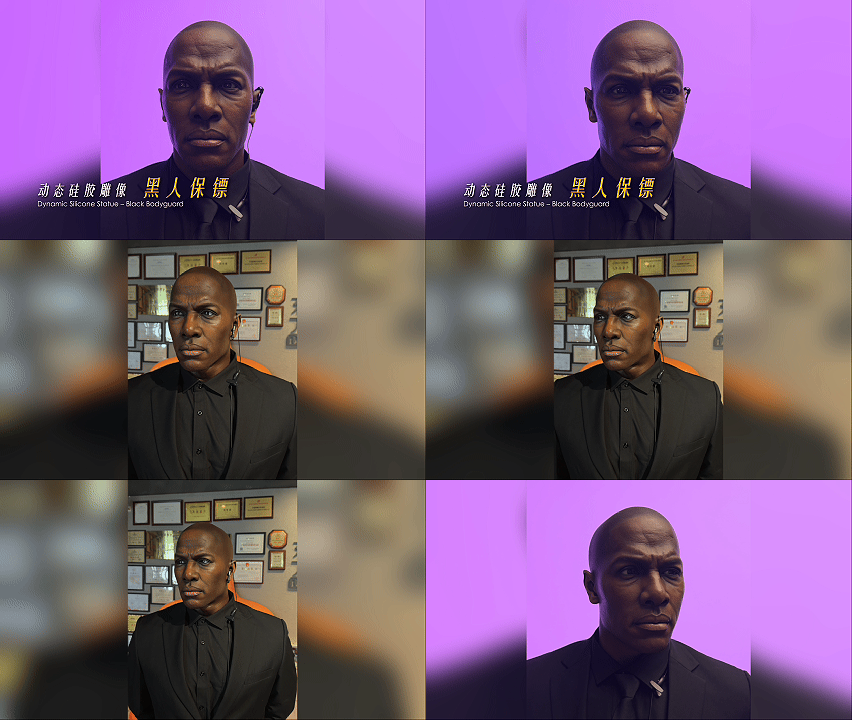
A head turn or a blink on its own is rarely enough. When people redirect their attention, the eyes often move first, followed by a blink or a small adjustment of the head. The timing between those actions is subtle but visible.
The security guard figure therefore combines blinking, head rotation and independent eye movement. The moving eyes give the character a clear point of attention, while blinking and small head movements prevent the expression from remaining fixed.
This type of facial motion is suited to greeters, celebrity portraits, themed characters and close-range interactive exhibits. Because visitors view and photograph these figures from a short distance, the continuity of each movement, facial material, mechanical noise and concealed access all influence the final effect.
From individual figures to scene-based customization
An artist portrait depends on gaze and restrained head movement. A television-inspired group scene depends on relationships and timing. An animal figure needs a motion pattern that reflects natural behaviour. One mechanical solution cannot serve every project.
- Design the appearance and motion together.
Define the pose, proportions and main viewing angles before arranging the internal mechanism, so the movement does not compromise the figure's silhouette. - Choose the motion structure for the character.
Portraits rely on gaze, blinking and small head movements. Group scenes rely on sequence and synchronization. Animal figures need compound motion based on recognizable behaviour. - Program movement around the scene.
Speed, intervals and triggers can be adjusted for automatic loops, sensor activation, narration, lighting cues or integration with a venue control system. - Plan access for inspection and maintenance.
The sculpture, mechanical system, control components and maintenance route should be considered together. Access panels need to stay concealed while remaining practical for technicians.
With an 11,000+ m² manufacturing facility, the team can coordinate figure sculpting, motion structures, control programming and on-site installation around the character concept, venue drawings, viewing distance and operating requirements.
If you are planning an animatronic exhibit for a theme park, cultural attraction, museum or commercial complex, share the project concept, reference images, dimensions, installation location, required movements and target completion date with DXDF. The team can then assess a suitable mechanical and control approach.
Related Articles:
- Sochi Wax Museum Design & Build Project Case
- Application of Silicone Wax Figures in Theme Parks: Core Attraction for Creating Immersive Cultural Tourism Experiences
- Guest House: Welcome Home: A Cross-Cultural Art Collaboration Between DXDF & Alexander Wang
- From Spider-Man to Uzbekistan: Six Years of New Faces at a Wax Museum
- COLOMBO Space Exploration Pop-Up: Cashmere's Interstellar Journey
- How to Build a Popular Theme Wax Museum: From Spatial Design to Custom Sculptures
- Application of Silicone Wax Figures in Internet-Famous Check-in Spots: A Scenario Creation Solution for Traffic Password

Grand Orient Wax Art service as a mature manufacturer of wax figure.
Zhongshan Grand Orient Wax Art Co., Ltd. is one of the earliest organizations making waxwork creations in China.
ADDRESS
Building 7, No.6 Hangfeng Six Road, Guangdong Game & Amusement Culture Industry City, Gangkou Town, Zhongshan City, Guangdong, China