


How Are Wax Figures Made? A Guide from Character References to Final Delivery
When planning a wax museum, museum exhibition or themed attraction, choosing the people to feature is only the first step. The same person can be portrayed at different ages, with different expressions and poses. Clothing and props can also tell stories from different periods of their life. These early decisions shape both the sculpture and its final presentation.
For project teams, understanding the production process makes it easier to prepare reference materials, coordinate approvals and plan delivery. Turning a photograph into a lifelike, three-dimensional figure requires close collaboration between the client and the production team at every stage.
Drawing on DXDF’s custom production standards, this guide explains how a hyper-realistic silicone figure—commonly known as a wax figure—takes shape.
1. Defining the Character Through Accurate References
Before production begins, the first task is to establish which period of the person’s life the client wants to portray and what expression or mood the figure should convey.
For historical personalities and film or television characters, appearance, hairstyle and clothing can change considerably over time. Using references from different periods without selecting a primary reference can lead to an inconsistent portrayal. Choosing a representative appearance therefore gives the project a clear starting point.
Multi-angle visual references: High-resolution front and side photographs help sculptors study facial contours. Additional photographs and video footage provide a clearer understanding of head shape, body proportions and posture.
Costume and prop research: Details of fabrics, footwear and accessories should be collected alongside facial references. Physical items, photographs and historical records help establish a consistent basis for the complete appearance.
Exhibition context: The team also needs to understand where and how the figure will be displayed. Will it appear in a historical scene behind glass, an open photo area or an animated installation within a wider story? Clarifying the display requirements early helps guide the subsequent production work.
2. Capturing Expression and Proportion in Clay
Once the reference direction is established, an experienced sculptor develops the clay model, gradually shaping the head, facial proportions and body pose.
Recognizability often depends on subtle relationships: the depth of the eye sockets and brow, the width of the nose, the curve of the mouth and the way facial muscles respond to an expression. Beyond the face, the angle of the head, the position of the shoulders and neck, and the distribution of body weight all contribute to a convincing presence.
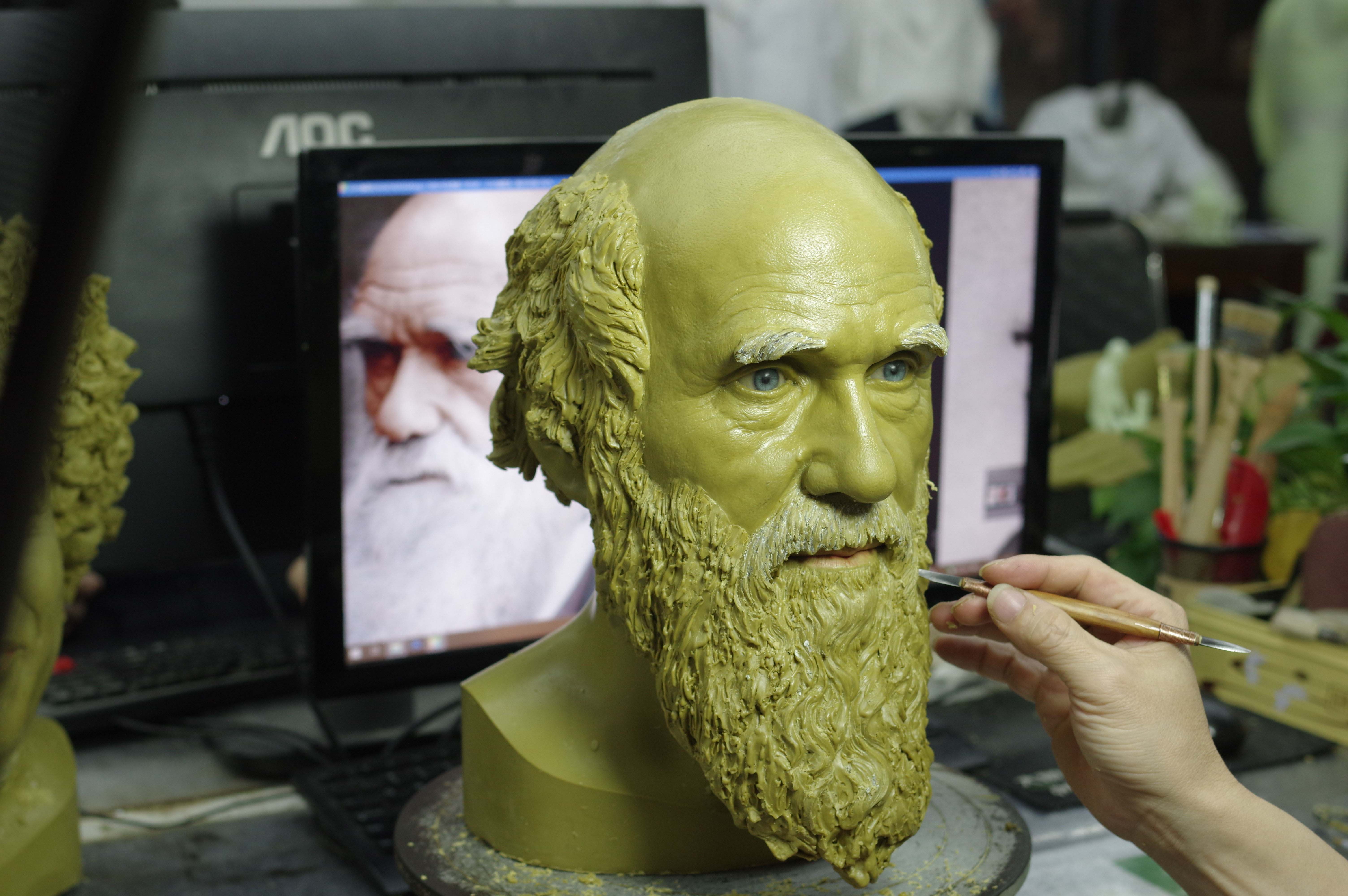
Clay-stage approval: The clay model is a key opportunity for the client to review the person’s likeness and pose. Comparing it with the agreed references helps the project team assess whether the proportions, expression and overall character meet expectations.
Giving useful feedback: Specific comments supported by reference images help the sculptor make precise adjustments. For example, a client might ask for the smile shown in Reference A or a more focused gaze. This gives the team a clearer direction than a general comment that the figure “does not look quite right.”
3. From the Clay Model to a Medical-Grade Silicone Form
After the client approves the clay model, production moves into mold making and casting. This stage transfers the model’s contours and fine surface details into a precision mold.
Although these works are commonly called “wax figures,” modern, durable figures often use medical-grade silicone and high-strength fiberglass (FRP). We configure the materials according to the figure’s shape, structural support requirements and exhibition environment.
The central task is to carry the approved likeness from the clay model into the silicone form. Facial contours, fine skin texture and component joints require careful mold preparation and bubble removal, creating a sound foundation for coloring, hair implantation and styling.
4. Bringing Skin Tone, Eyes and Hair to Life
A newly cast silicone form still needs detailed finishing to achieve a lifelike appearance. Coloring, eye detailing and hair work gradually develop the character established in the sculpture.
Layered skin coloring: Real skin has variations in color, depth and translucency. Technicians use specialized silicone pigments, layered coloring and hand painting to reproduce subtle veins, spots and transitions across exposed areas such as the face and hands. These details should reflect the person’s age and appearance.
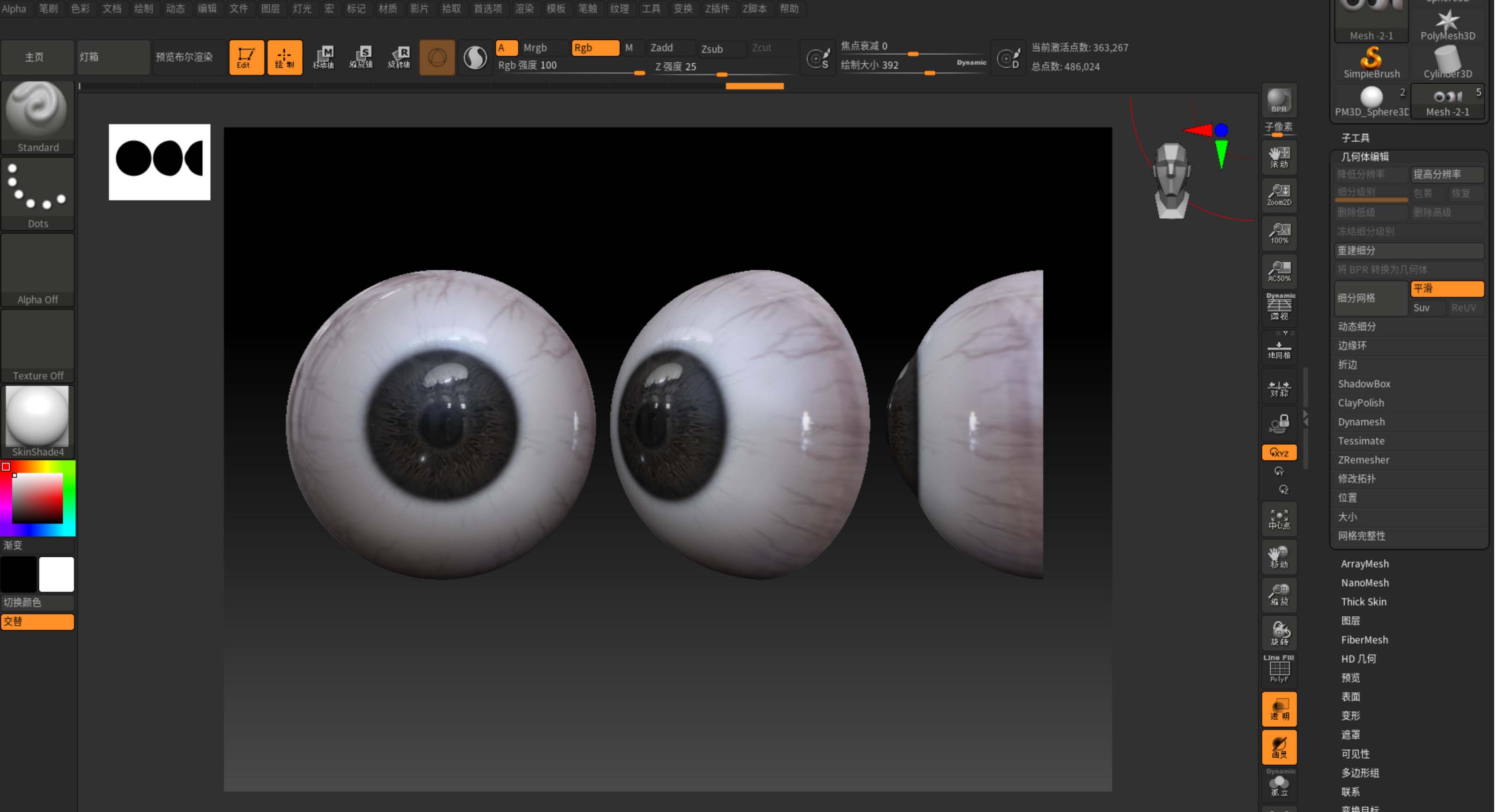
Eye detailing: The direction and surface sheen of the artificial eyes need to work with the angle of the head and the body pose, creating a focused, convincing gaze.
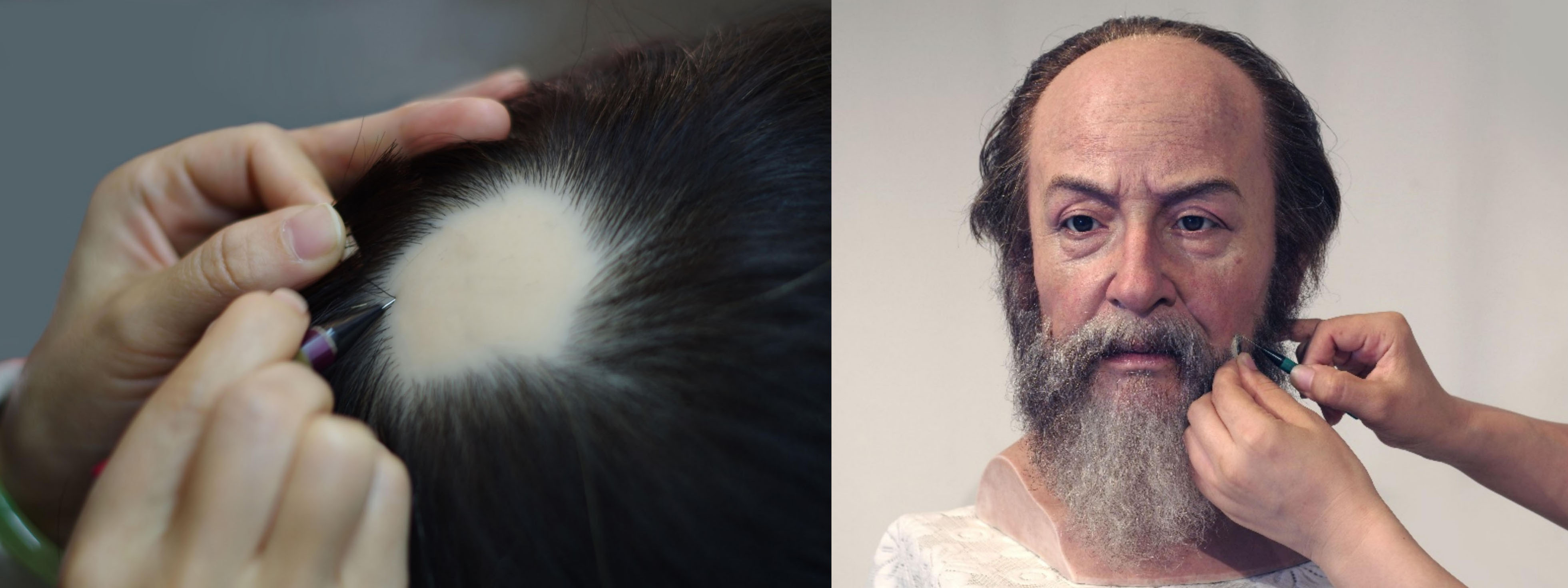
Individual hair implantation: The hair team uses fine implantation needles to insert selected human hair or specialized synthetic fibers into the silicone scalp, following natural growth patterns. Washing, cutting, heat styling and finishing then establish the hairline, eyebrows, facial hair and overall hairstyle.
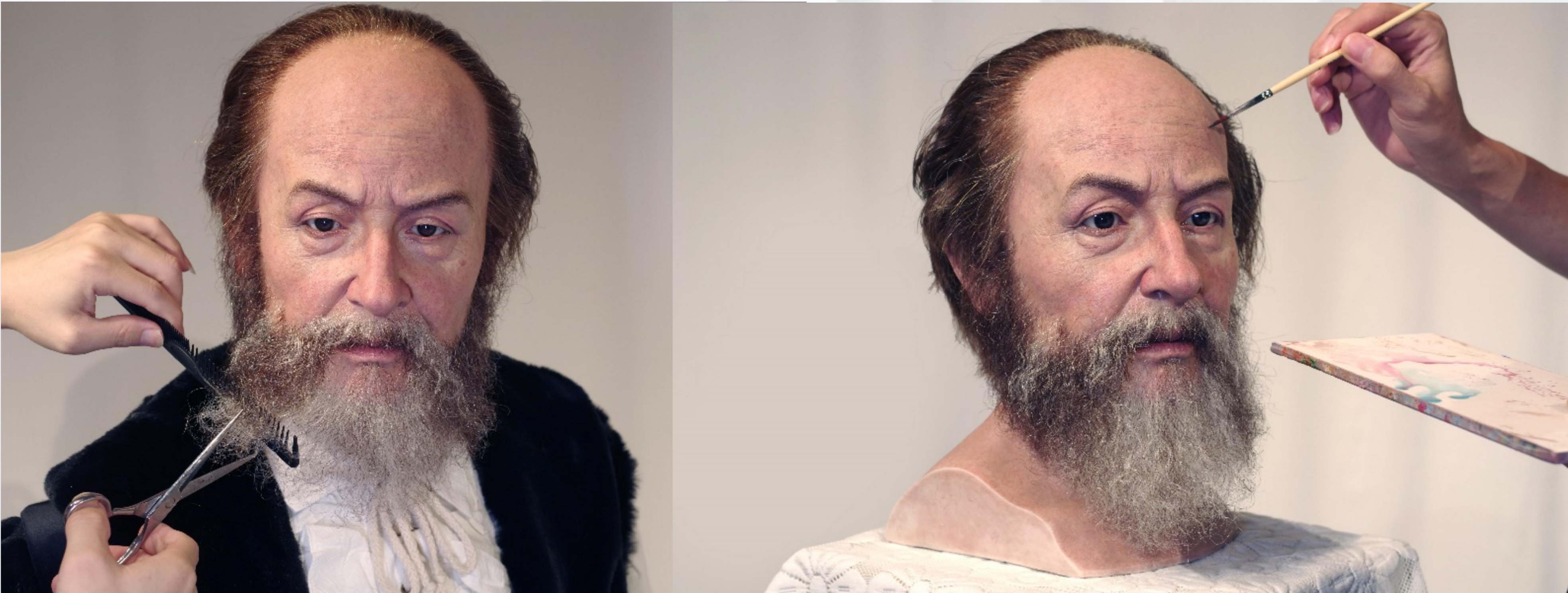
Reviewing the complete effect: Close-up photographs reveal skin texture and hair details, while full-body and multi-angle views show whether the expression and pose work together. Both are useful when assessing the figure’s overall appearance.
5. Completing the Character with Clothing and Props
Clothing and props help visitors recognize a person’s identity, historical period and story. A familiar stage outfit, a carefully researched historical costume or a distinctive personal item can be central to the portrayal.
Fit and drape: Garments may be made to measure or altered to suit the figure’s proportions and pose. Collars, cuffs and fabric folds need to sit naturally on the body.
Prop coordination: Handheld objects should fit the position of the hands and support a believable action.
Client-supplied clothing: If the project team plans to provide historical garments or custom costumes, dimensions and delivery dates should be discussed early. This allows the production team to account for their fit while developing the body form.
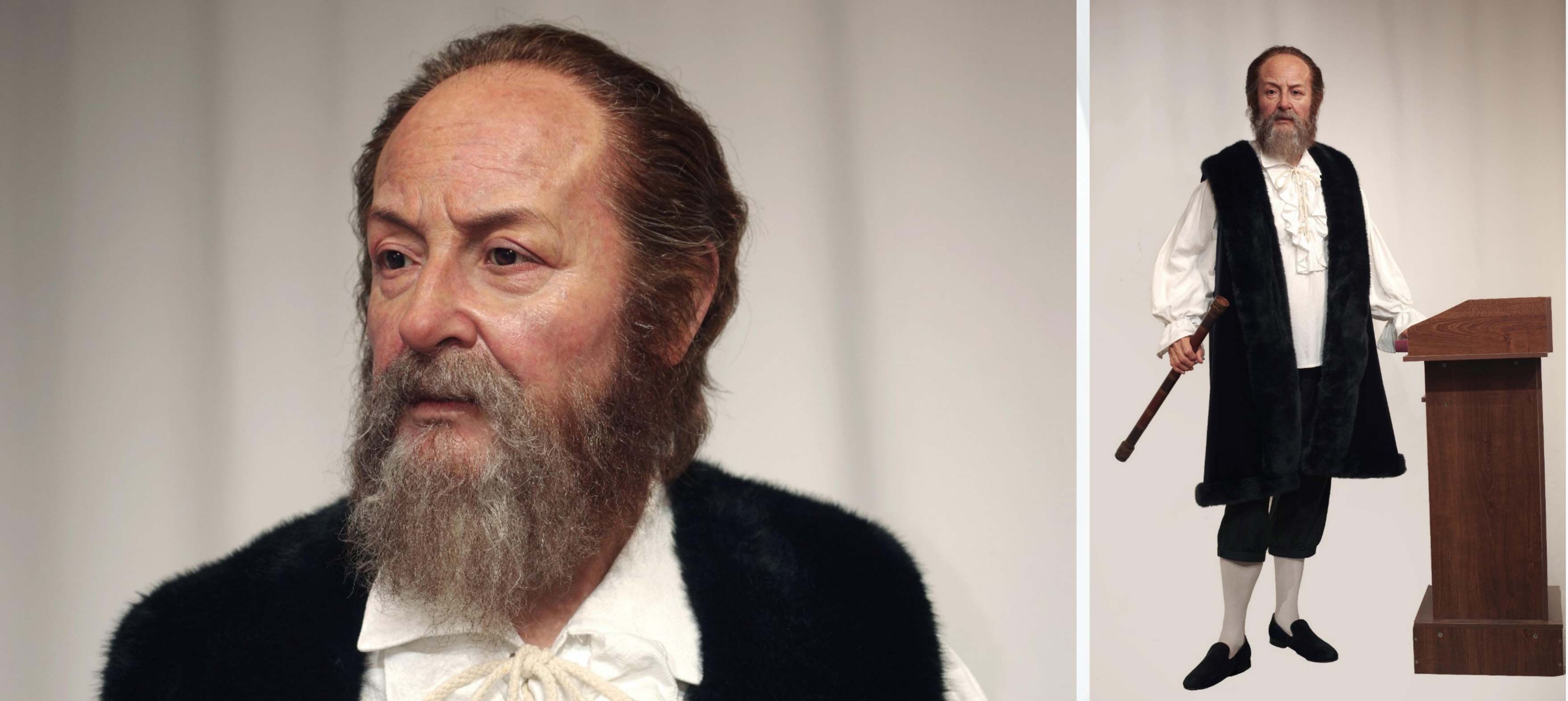
6. Final Approval, Installation and Maintenance Handover
Once the figure is complete, the project team can review it against the agreed references and production plan. Final approval covers the likeness, pose, skin tone, hair, clothing and accessories.
Consistency across a collection: When several figures are commissioned for one venue, the review should also consider their relative proportions, sightlines and spatial relationships. This helps the collection form a coherent display after installation.
Site access and logistics: Entrance dimensions, elevator load limits, handling routes and the site’s construction schedule should be confirmed in advance. These details help coordinate protective packing, transport and unloading.
Maintenance handover and after-sales support: Following installation, DXDF provides the venue team with standardized daily cleaning and care guidance. If costumes or props are damaged, or an unexpected issue arises, we provide professional remote assessment and on-site restoration services to restore the figure’s appearance.
Final Thoughts
A successful hyper-realistic figure depends on skilled sculpting, suitable materials and clear collaboration between the client and the production team. From selecting the first reference images to positioning the finished figure in the exhibition, each review helps bring the intended person and story into focus.
If you are developing an exhibition or commissioning a custom figure, share your proposed subjects, reference images, exhibition location and required delivery date with DXDF. Our team will help plan the character’s appearance and the production and delivery arrangements around your project.

Grand Orient Wax Art service as a mature manufacturer of wax figure.
Zhongshan Grand Orient Wax Art Co., Ltd. is one of the earliest organizations making waxwork creations in China.
ADDRESS
Building 7, No.6 Hangfeng Six Road, Guangdong Game & Amusement Culture Industry City, Gangkou Town, Zhongshan City, Guangdong, China