



Educational Initiatives in Wax Figure Manufacturing: Engaging Audiences and Inspiring Creativity
Wax figures have been an interesting aspect of bringing culture and creativity alive. Capturing the spirit of world leaders, entertainers, and artists, these lifelike sculptures enable individuals to associate themselves with iconic personalities. Historically, wax figures were connected with museums and exhibitions, but with new technologies and pedagogical experiences, things have changed, and people experience wax figures differently.
Such developments create new possibilities for schools, cultural centers, and artistic organizations to fascinate viewers of all ages, and as they speak to them about history and the art of sculpture. Let’s now explore the educational initiatives around wax figure manufacturing.
Education in the Manufactory of Wax Figures
The construction of a wax (or silicone) figure is both a learning process and an art. Each of its works is a blend of fine art, design, engineering, and cultural research, hence showing the inclusion of this art form as a perfect way to engage students and visitors. Within the context of education programs in this area, learners are given a chance to discover:
● Artistic abilities: Sculpting, painting, and detailing in the design of wax figures.
● Scientific procedures: Knowledge of anatomy, material science, and molding processes.
● Cultural awareness: Learning the life histories of the figures and their significance in history, and the cultural contributions that they made.
● Technology application: Gaining knowledge about how contemporary technology, such as 3D scanning and digital modeling, increases accuracy in figures.
It is such a comprehensive process that makes wax figure manufacturing a superior teaching model, linking imagination to practical activity.
Inspiring Creativity Through Hands-On Learning
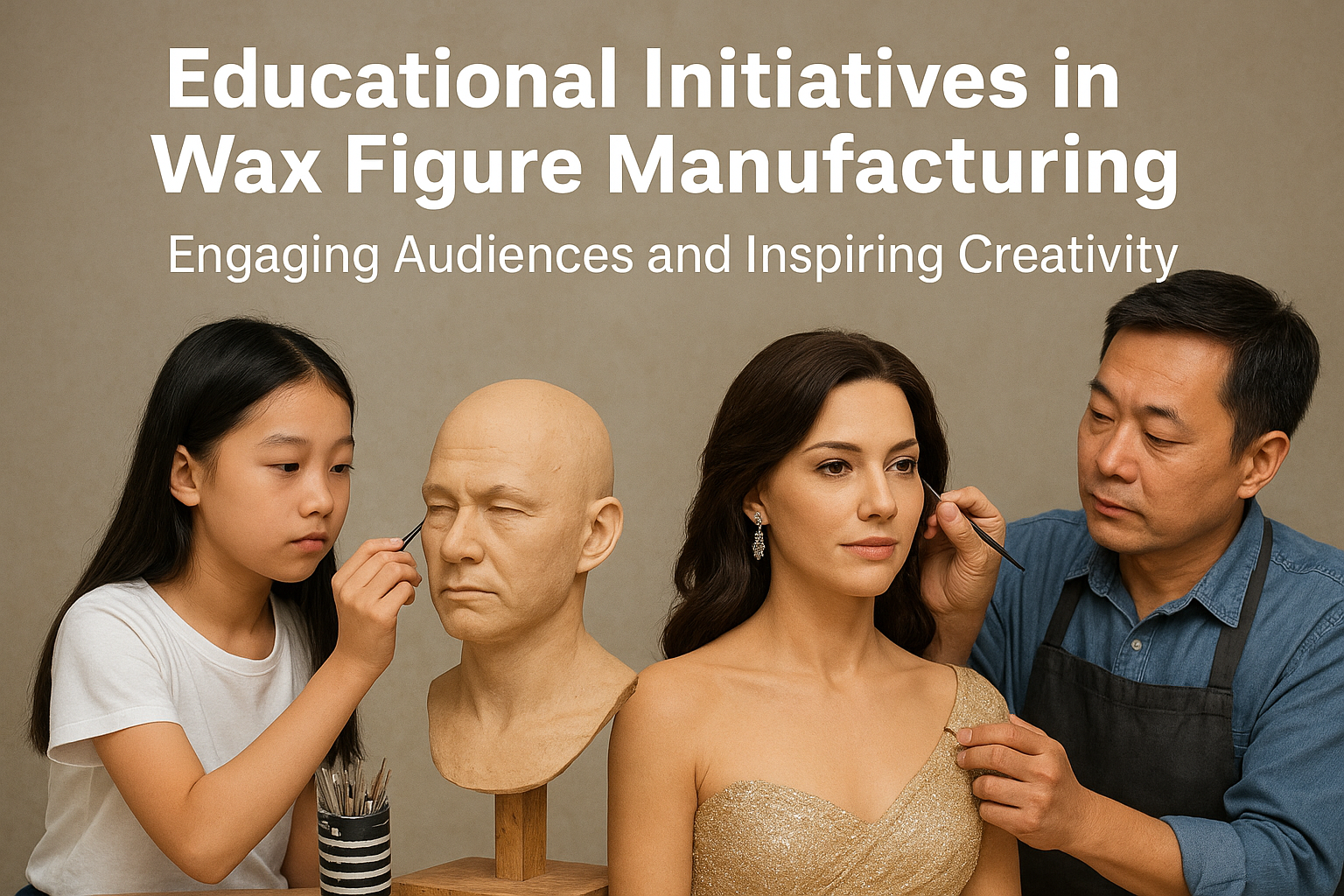
Giving audiences an opportunity to participate in the art of wax figure creation provides both students and visitors with a learning experience through participation. Some schools are starting to use rehearsals and backstage activities to get students interested in creativity. Through the programs, participants are allowed to:
● Notice the human expressions as reproduced by professional sculptors
● Use silicon, clay, or your modeling program; otherwise, of course, it is possible to create miniatures digitally.
● Learn how the use of color, textures, and the insertion of hair details make a difference.
● Discuss the effects of lighting and staging to further emphasize a form.
Hands-on activities foster artistic ability, enhance problem-solving skills, and foster creativity among students. By exposing some mystery behind the process, wax figure production ceases to be a museum; it becomes a school of imagination.
Wax Figures in Museums and Cultural Education
Museum experiences are one of the most effective forms to integrate education into the wax figure manufacturing process. A Wax Museum Project is more than just displays; it can be a breathing academic center in which history, art, and culture can converge. For example:
● Museums can also conduct interactive tours during which the guides explain the creation of figures.
● Students may study historical figures and present their accounts and figures.
● There may be creative competitions in the plans of future exhibits, in which it is good to involve young artists.
Using learning as a means to engage its visitors in a hands-on approach, wax museums become compelling cultural and educational spaces that can make people of all age groups curious and creative.
The Shift from Traditional Wax to Silicone
Although conventional wax figures are charming, they cannot elude issues of fragility, maintenance, and lack of realism. Silicone models such as those made by DXDF Art are different in this regard. Silicone permits:
● Increased durability, so that characters endure longer with fewer repairs.
● Improved realism that represents skin well in terms of tones and textures.
● Appropriate change to any climatic change, thus they could be used in world exhibitions.
Such an innovation also enhances the quality of museum exhibitions, and gives a more dependable source of learning to institutions that would like to make a bet in long-term learning.
Educational Partnerships and Global Impact
The educational aspect of work has also been adopted by wax figure manufacturers. Many of these companies work with schools and cultural institutions, and organizations to bring awareness about the art and science of figure manufacturing. The campaigns entail, among others:
● Workshops and Training: An introduction to the sculpting and modeling process for the students.
● Collaborative Projects: Working with institutions to create custom-made exhibits to meet their educational objectives.
● Cultural Preservation: Reconstructing the faces of previous people to educate the new generations on the cultures of their ancestors.
Incorporating education and artistry, wax manufacturing does not have to be limited to its commercial interests, but it can also help in social and cultural development.
Inspiring the Next Generation of Creators
Educational programs in wax figure production are not only involved in educating practices, but also in motivating the future. Having the chance to observe how people in the past and present can be recreated, young individuals cultivate their fascination with cultures and the arts.
It provides academic options to its wannabe artists as a career in sculpting, design, or museum studies. As far as students of history and culture are concerned, there is a novel method to relate to history.
The most important thing is, these efforts illustrate how technology and art can be fused in order to make something relevant. This is where innovation is sparked in different fields that encourage young minds to think differently and be innovators.
Conclusion: A Future of Learning and Creativity
Educational interests in the production of wax figures are transforming the interaction between audiences and their expressions of history, culture, and art. By adopting new techniques and materials, including silicone, companies like DXDF Art are transforming the field and opening the door to the learning and creation of a new experiential world. Instead of fixed wax figures and museums or anatomical stuff in cases, we are seeing wax figures as an evolving item of education.
DXDF Art: Redefining Wax Figure Manufacturing
The face of this change is DXDF Art, a prominent Silicon Wax Figure Manufacturer and an operator of multiple world-class wax museums, with twenty years of experience. Headquartered in China, the company has completed numerous Wax Museum Projects across the globe to enable museums, theme parks, and cultural centers to establish memorable experiences.
The main distinguishing feature of DXDF Art is quality and innovation. All of the figures are created with the use of a team of talented sculptors and makeup specialists, designers, who focus on the minutest details, including the facial expressions to strands of hair. DXDF Art understands it is important to use high-grade silicone that not only makes their creations look realistic but also ensures they are long-lasting.

Grand Orient Wax Art service as a mature manufacturer of wax figure.
Zhongshan Grand Orient Wax Art Co., Ltd. is one of the earliest organizations making waxwork creations in China.
ADDRESS
Building 7, No.6 Hangfeng Six Road, Guangdong Game & Amusement Culture Industry City, Gangkou Town, Zhongshan City, Guangdong, China