



Haunted House Design: Building Suspense with Realistic Wax Figures and Live Actors
A costumed figure stands motionless in the corner of a dimly lit room. Visitors cannot immediately tell whether it is a performer or a wax figure, or where the next sound or movement will come from. That uncertainty gives a haunted house scene room to build its story.
Realistic wax figures and live actors, sometimes called NPCs, serve different purposes. A figure establishes a scene through its fixed pose, expression and costume. A performer moves the story forward through movement, voice and interaction. How they work together depends on each character's role and the order in which visitors encounter them.
The Role of Wax Figures in Haunted Houses
An attraction built around live performances asks actors to repeat their cues, stay in character and adapt to the pace of each group. If every room uses a similar entrance or reveal, visitors may begin to anticipate the next scare.
Wax figures can take on roles that require a sustained pose: a guard seated at a desk, a bride beside a doorway or a prisoner at the far end of a corridor. Before a performer appears, these characters can establish the room's purpose, its backstory and the relationships within it, giving visitors something to observe while they wait.
This arrangement gives live performers more options. They can enter at a particular story moment or interact with a static character; not every character needs to deliver a jump scare.
Ghost Wedding Scene: Figures and Actors Working Together
Consider a room based on a ghost wedding. A wax bride in wedding attire could stand where visitors can easily see her as they enter. Her lowered gaze, hand position and the drape of her clothing suggest that she is waiting, inviting visitors to watch for movement.
While their attention rests on the bride, a performer playing the groom on the other side of the room could turn, speak or make another movement tied to the story. The contrast between stillness and action connects the scare to the relationship between the characters.
For this scene concept, the effect depends on the entrance sightline, lighting, distance between characters and the performer's timing. If both characters compete for attention, or the actor is visible too early, the suspense may break. Figure placement therefore needs to be rehearsed with the performance, rather than decided from a single rendering.
Character Design That Fits the Theme
Once a character's role is established, its appearance needs to communicate the story. Chinese horror and Gothic settings may use different costumes, expressions and surface treatments, but those details should fit the character's identity and surroundings.
Chinese Horror Themes
A ghost bride, the caretaker of an abandoned residence or a temple figure can convey identity through clothing, posture and expression. A lowered gaze, a hand suspended mid-gesture or an unusual seated pose can leave visitors wondering what happened. Cracked, weathered or algae-like textures should also have a reason within the story, such as a character associated with a clay statue or water.
Gothic Suspense Themes
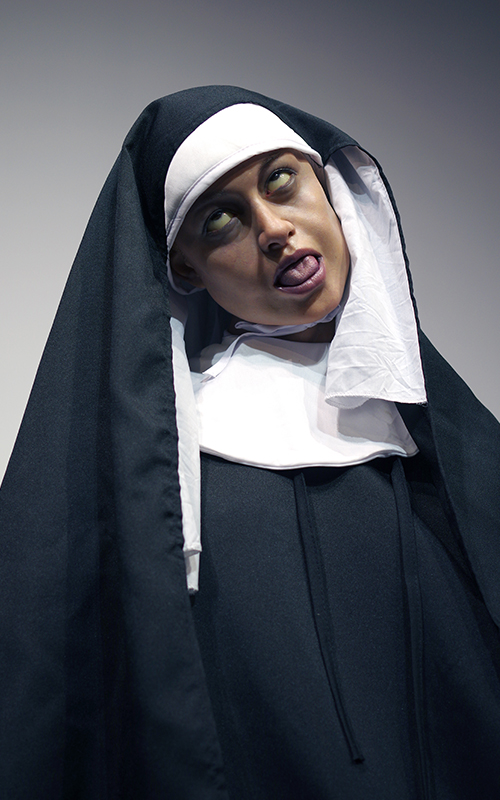
Characters in castles, convents and dungeons can communicate their identities through period clothing, posture and props. A prisoner and a nun, for example, should have distinct poses and directions of gaze even when both remain still. Details that fit the surrounding architecture and lighting help each figure belong to the setting.
Whichever theme is chosen, the character needs to work at the actual viewing distance and under the intended lighting. Details that stand out in concept artwork may disappear in a dark room, making fabrication choices part of the design process.
Quality Considerations When Sourcing Wax Figures
At close range, visitors may notice the eyes, hands or hairline before they see the whole figure. Production decisions should account for how these areas will appear and which details matter to the character.
Skin color layers, surface texture and sheen should be checked under the proposed lighting. Strong colored light may mask variations in skin tone, while side lighting can emphasize contours and texture. Photographs taken in a brightly lit studio are therefore not enough to judge the finished effect.
Hair, eyes and costumes also contribute to a believable character. For figures viewed up close, discuss hair implantation, eye fabrication and costume details. For characters seen from a distance, first assess the silhouette, pose and balance of light and shadow. Our wax figure production guide explains the related fabrication stages.
Material selection also needs to account for site conditions. Indoor temperature and humidity, lighting positions, potential visitor contact, cleaning and handling should be discussed before production, along with the appropriate use and maintenance requirements.
Coordinating Layout and Live Performance
Once the figures are made, they need to be assessed within the complete scene. Who visitors see first, where they pause and when they hear a sound all affect the performance's rhythm. Static characters allow moments of observation and anticipation; actors can then enter at the appropriate point, creating changes of pace between rooms.
During on-site rehearsals, follow the visitor route to check whether figures are identified as props too early, actors' positions are exposed or lighting misses important details. Figure placement and performer movement also need to leave room for visitors to pass, reducing the risk of startled guests colliding with props or actors.
These site requirements can be included in the commissioning brief, so character design and fabrication reflect the intended use from the start.
Preparing for a Custom Figure Project
If you are planning a horror attraction or updating the characters in an existing haunted house, share your story concept, character references and site photos with DXDF to discuss your custom figure project. Include the figure dimensions, intended placement, lighting conditions and required delivery date to help define the design, materials and installation arrangements.
Related Articles:
- Scientist Silicone Sculptures & Spatial Exhibition Design: Elevating STEM Education Through Hyper-Realistic Art
- Guest House: Welcome Home: A Cross-Cultural Art Collaboration Between DXDF & Alexander Wang
- Chaozhou Chaoren Park "Journey to the West" Space: DXDF Creates a Chaoshan Cultural Landmark
- COLOMBO Space Exploration Pop-Up: Cashmere's Interstellar Journey
- Christmas Window Display Ideas: How Wax Figures Create a Luxury Retail Experience
- BKT's 10-Meter Angel Sculpture in Beijing: A DXDF Art Project

Grand Orient Wax Art service as a mature manufacturer of wax figure.
Zhongshan Grand Orient Wax Art Co., Ltd. is one of the earliest organizations making waxwork creations in China.
ADDRESS
Building 7, No.6 Hangfeng Six Road, Guangdong Game & Amusement Culture Industry City, Gangkou Town, Zhongshan City, Guangdong, China