


Let the Exhibits Tell Their Own Stories: How Can Nature Education Exhibits Create Talking Animatronic Animals?
In natural history museums, science centres and ecological exhibits, static specimens and text panels can struggle to hold the attention of visitors moving quickly through the space. Museum teams and exhibition designers are increasingly introducing animatronic animals with narration into key areas, allowing the animals to act as guides and communicate ecological knowledge through their gaze, gestures and voice.
These highly customised exhibits combine sculpting, mechanical engineering, and audiovisual control. During early planning, curatorial and procurement teams often face practical questions. How detailed should the script be? How should movement work with the narration? What should be checked before commissioning a manufacturer?
Drawing on DXDF’s experience developing animatronic animals with built-in narration for overseas nature education exhibits, this guide sets out four stages to help curatorial and project teams define their requirements before production begins.
1. Define the Animal’s Role Through the Educational Objectives
Many teams hesitate at the enquiry stage because they have yet to complete the narration script. At the start of a project, a clear description of the animal’s storytelling role gives the manufacturer a basis for discussion.
The curatorial team can begin with three questions.
- Who will the animal be speaking to? For preschool children, the tone should be lively and the pacing engaging. For school groups and general audiences, the presentation needs to balance interest with scientific accuracy.
- How long will visitors stay? Agree on the duration of each narration segment and the interval between presentations with the manufacturer, taking the content, visitor viewing patterns and the venue’s visitor-management arrangements into account.
- How many languages are required? Plan for single-language, bilingual or multilingual playback according to the venue’s visitor profile, and establish how visitors or staff will select the language.
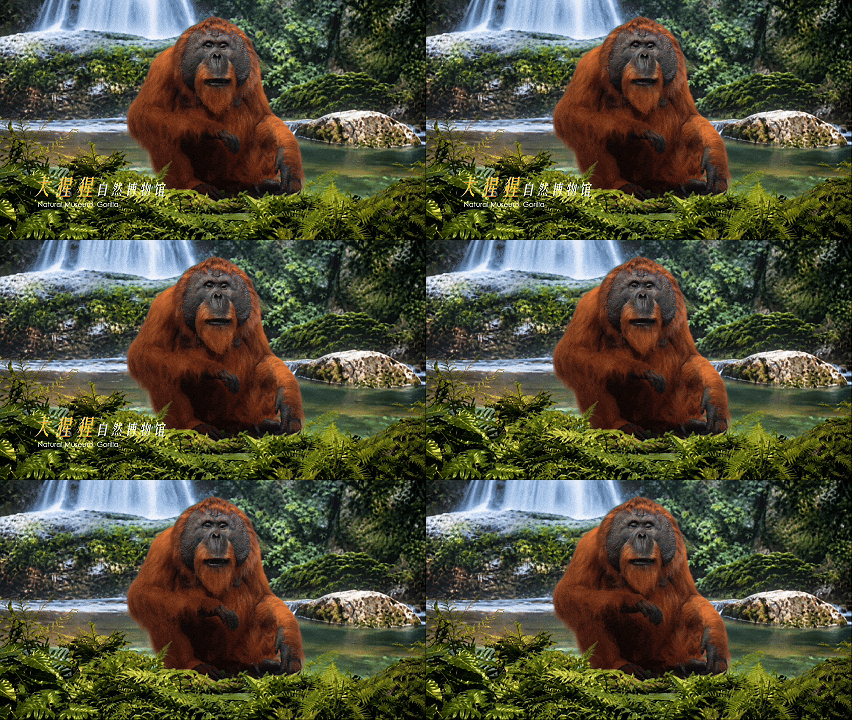
Malaysia’s cultural and ecological exhibition spaces offer a reference for incorporating animal characters into an immersive setting. In the Malaysian project featuring an animatronic orangutan made by DXDF, the museum team established a clear objective early on. This locally representative species would become a “forest guide,” introducing visitors to the surrounding tropical rainforest ecosystem and its animal neighbours.
With that storytelling perspective established, the design team could develop an approachable, guiding expression for the orangutan while considering viewing angles, display height and the surrounding scenery. Work could begin while the full script was still being developed.
See a visitor’s account of the orangutan exhibit at the Hikayat Chamber.
2. Coordinate Voice, Facial Movement and Body Language
A talking animatronic animal can feel unconvincing if its mouth moves while its body remains rigid, or if the movement falls out of rhythm with the narration. When briefing the manufacturer, buyers can describe the intended performance and let the engineering team translate that description into programmed movement.
Coordination between three areas can give the narration a more natural presentation.
Mouth Movement and Narration Timing
Discuss the rhythm of mouth opening and closing in relation to the recording’s pace and pauses. If the project requires precise lip synchronisation, confirm the achievable result with the manufacturer in advance and use a demonstration as the basis for approval.
Head Turns and Blinking
Variations in blink timing, gentle head turns and slight nods can suggest an animal observing its surroundings and directing its attention towards visitors. These movements help create a more natural expression.
Hand and Arm Gestures
Gestures are especially relevant for an animal acting as a guide. When the narration says, “Look at the canopy beside us,” or introduces a neighbouring species, a timed lift, pointing movement or wave can direct visitors’ attention towards the scenery or an information panel.
The exhibition designer, museum team and manufacturer also need to clarify how surrounding equipment will work with the figure. Will the museum supply a finished recording, or commission voice production through the manufacturer? If the exhibit includes bilingual subtitles, background projection or changing display lighting, will the animatronic control box initiate the sequence, or will it connect to the venue’s central show-control system?
Defining these connections early can reduce coordination work during on-site installation and commissioning.
3. Assess Delivery Capability Through Four Checks
Animatronic animals are custom-built products. Once mould-making and mechanical fabrication begin, changes can become more expensive. When selecting a partner, museum teams and exhibition designers should assess the manufacturer’s practical delivery experience alongside the quotation.
| Assessment stage | Main consideration | What should the buyer request? |
|---|---|---|
| 1. Relevant technical experience | Previous completed projects combining narration and movement | Request complete footage of comparable projects. Pay particular attention to how mouth movement works with the narration and to the sound produced by the mechanism during operation. |
| 2. Appearance and expression | Approval stages throughout production | Confirm which review stages are included in the quotation and production plan, such as clay sculpting, model review, colouring or hair implantation. Agree on what can be adjusted and how approval will be given at each stage to reduce differences between expectations and the finished figure. |
| 3. Transport and installation | Disassembly arrangements and site conditions | Confirm whether a large figure can be separated for transport. Check freight-lift dimensions, load capacity, power requirements and the time needed for on-site installation. |
| 4. Handover and ongoing maintenance | Daily operation and after-sales support | For public venues operating frequently throughout the day, check that start-up, shutdown and volume adjustment are straightforward for staff. Confirm warranty terms for key drive components and the spare-parts list. |
4. Frequently Asked Questions for Curatorial and Procurement Teams
Can We Request a Quotation with Only an Animal Species and an Exhibition Concept?
Yes. During early budgeting or tender preparation, you can provide the animal species, estimated size—such as a life-size figure—the exhibition theme and the intended interaction. For example, you might want the animal to speak, turn its head and use hand gestures.
The manufacturer can use this information to assess the complexity of the mechanism and provide an initial price range. Detailed movement programming can follow once the project proceeds and the script is confirmed.
Who Usually Provides the Script and Voice Recording?
Both arrangements are used, depending on the project’s division of responsibilities. Many natural history museums have their education team write the script and supply a professionally recorded voice track to maintain scientific accuracy.
If the exhibition company wants a more comprehensive service, the museum can provide a written outline and ask the manufacturer to help refine the text and arrange a professional voice recording. The museum then reviews and approves the recording before it is loaded into the system.
Can We Use an Existing Audio-Guide Recording?
You can first provide a clear audio file with minimal background noise so that the engineering team can check its compatibility with the control system. The team can then assess the mouth, gaze and hand movements in relation to the recording’s pace, pauses and emphasis.
How Can We Confirm the Finished Narration and Movement Before Shipment?
The manufacturer carries out integrated factory testing before packing and shipment.
Museum teams and exhibition designers can review high-resolution footage of the complete figure or conduct a live video inspection to check appearance, audio clarity and movement quality. If continuous-operation testing is required, agree on its duration and acceptance criteria with the manufacturer according to the planned operating frequency. Shipment can be arranged once the results have been approved.
Ready to Start Your Custom Exhibit Project?
Whether you are planning a featured ecological exhibit for a natural history museum or looking for an engaging animatronic installation for a cultural tourism or science education space, contact DXDF to discuss your initial concept and custom project requirements.
Related Articles:
- Museum Figure Displays: How to Define the Scope of a Commission, from a Single Figure to a Complete Museum
- Hyper-Realistic Animatronic Figures: Bringing Static Sculpture to Life
- Guest House: Welcome Home: A Cross-Cultural Art Collaboration Between DXDF & Alexander Wang
- From Spider-Man to Uzbekistan: Six Years of New Faces at a Wax Museum
- From London to Orlando: New Conversations About Themed Wax Museum Projects at IAAPA 2026

Grand Orient Wax Art service as a mature manufacturer of wax figure.
Zhongshan Grand Orient Wax Art Co., Ltd. is one of the earliest organizations making waxwork creations in China.
ADDRESS
Building 7, No.6 Hangfeng Six Road, Guangdong Game & Amusement Culture Industry City, Gangkou Town, Zhongshan City, Guangdong, China